


Criminal law formally acts upon individuals, but a defendant almost never arrives as an economically and socially isolated unit. He may have a mother who finds the lawyer, a girlfriend who attends court, and relatives who fund commissary accounts.
These are “justice-involved persons” in the literal sense, although none is the defendant or convict himself.
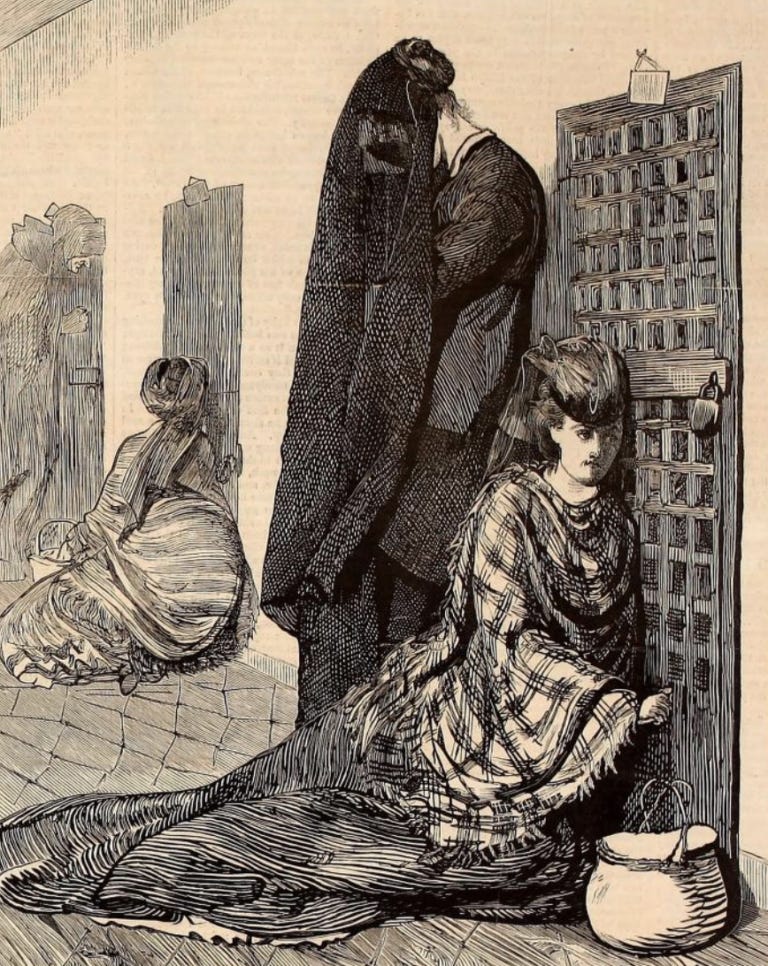
If he is convicted, the entire household may acquire a new calendar organized around his case: court dates, visiting days, parole appointments and the anticipated date of return. How does it replace lost income and childcare? What of employment and housing after release, or relationships with children?
The household’s material and emotional interests have become entangled with the fate of the offender. “Military household” does not mean everyone in the house enlisted. “Union household” does not mean every resident belongs to the union. A semantic gap exists where the term “criminal household” might otherwise be.
Its resulting preferences may include:
Earlier parole and less police attention around the home.
Automatic record sealing and better access to employment and housing after release.
Privacy from investigators and reluctance to assist an investigation.
The members of this household were never sentenced and may not approve of the crime. Nevertheless, they have acquired interests from their relationship to the convict.
Organizations inside and outside government openly advocate for those interests.
The household supplies urgency and testimony.
Public defenders and service organizations supply professional translation.
Foundations, researchers and policy offices convert recurring cases into categories, measurements and legislative programs.
This is not unique to justice policy. All public rulemaking must abstract from individual cases. A mother cannot submit “please help my son” as a general legislative principle. Organizations must explain why other people should accept the policy too.
But by the time these demands reach government, they no longer sound like “reduce the consequences imposed on people close to us.” They arrive as a neutral theory of justice, framed around second chances and successful reentry.
The public has a diffuse, statistical interest in safety, represented by an abstract crime rate. The justice-involved household has a name, a court date and a release date. Politics is a repeated game, and the household has reason to keep showing up.