


Before the MTA began piloting fifteen-second delays in early 2024, subway emergency gates offered a quicker and more convenient exit than the turnstile. Abuse of the emergency gate also offered unpaid entrance for anyone coming the other way.
The MTA had already tried making the shortcut unpleasant. From 2005, alarms sounded when the gates opened, and notices warned that nonemergency users could be arrested. They were ignored, and by 2015, the agency disconnected the alarms.
Who should the police stop, and how severely should fare evaders be punished? The MTA’s 2023 review describes how NYPD implemented a request from Manhattan’s District Attorney to divert rather than prosecute these cases. The NYPD told the MTA’s reviewers that officers gave verbal warnings but did not record when and how often they did this. An automatic mechanism like a timer reduces police discretion.
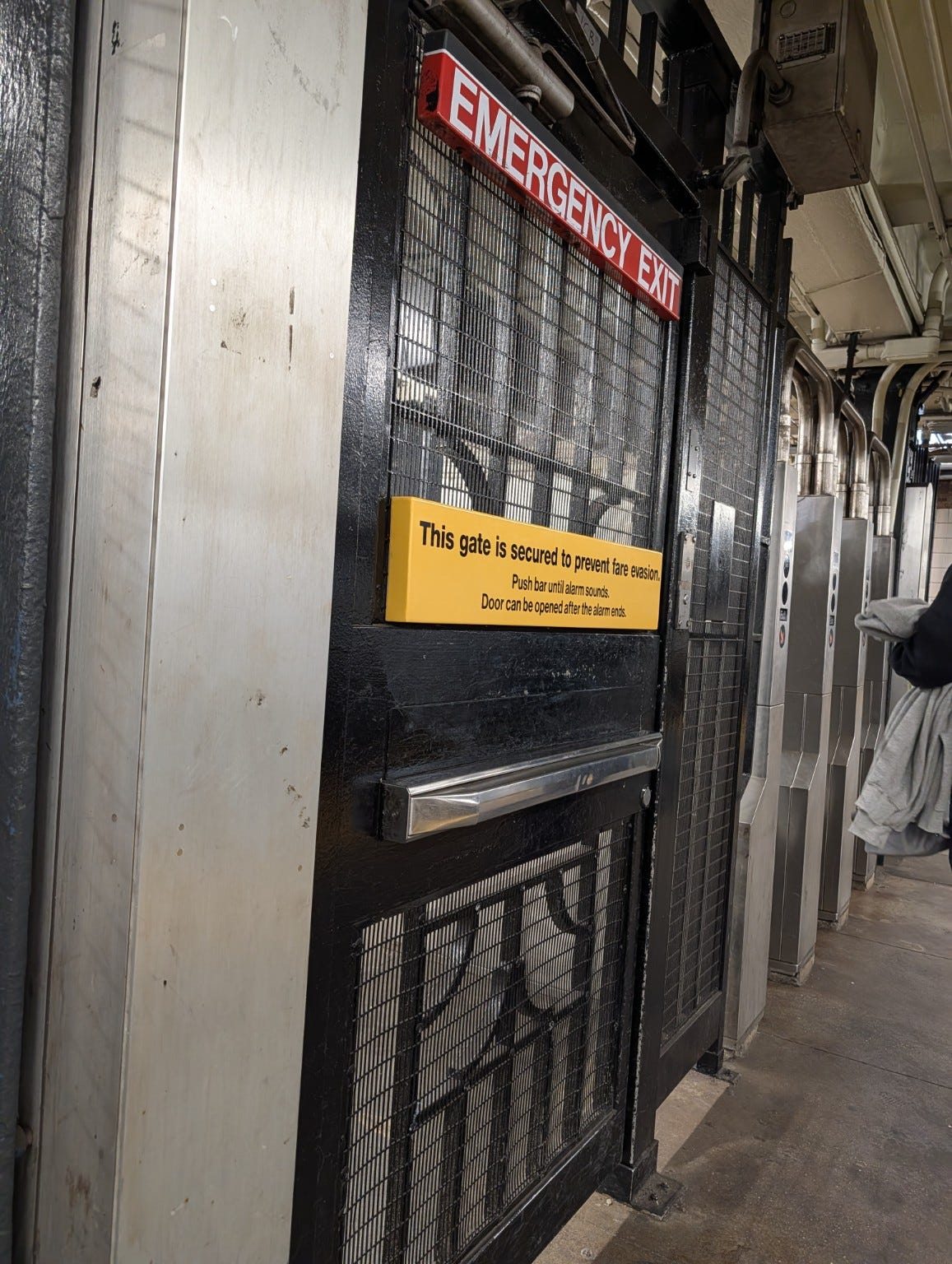
In the initial three-station pilot, the MTA reported 38 percent less evasion through emergency gates and 7 percent less evasion overall at those fare-control areas. An exiting passenger chooses the turnstile to avoid waiting for fifteen seconds, leaving the gate closed to someone who might take advantage of a “free subway ride.” The timer recruits one passenger’s impatience to frustrate another’s opportunism.
CVS uses delay to frustrate a more threatening customer. Its time-delay safes prevent employees from immediately surrendering controlled drugs, even under threat. Signs advise potential neer-do-wells that threatening the pharmacist cannot make the safe open sooner. CVS finished installing the safes nationwide in April 2023. It reported 50 percent fewer robberies at locations using them.
Neither system must make access impossible to make abuse less attractive. Sometimes making strangers wait is a public service.