


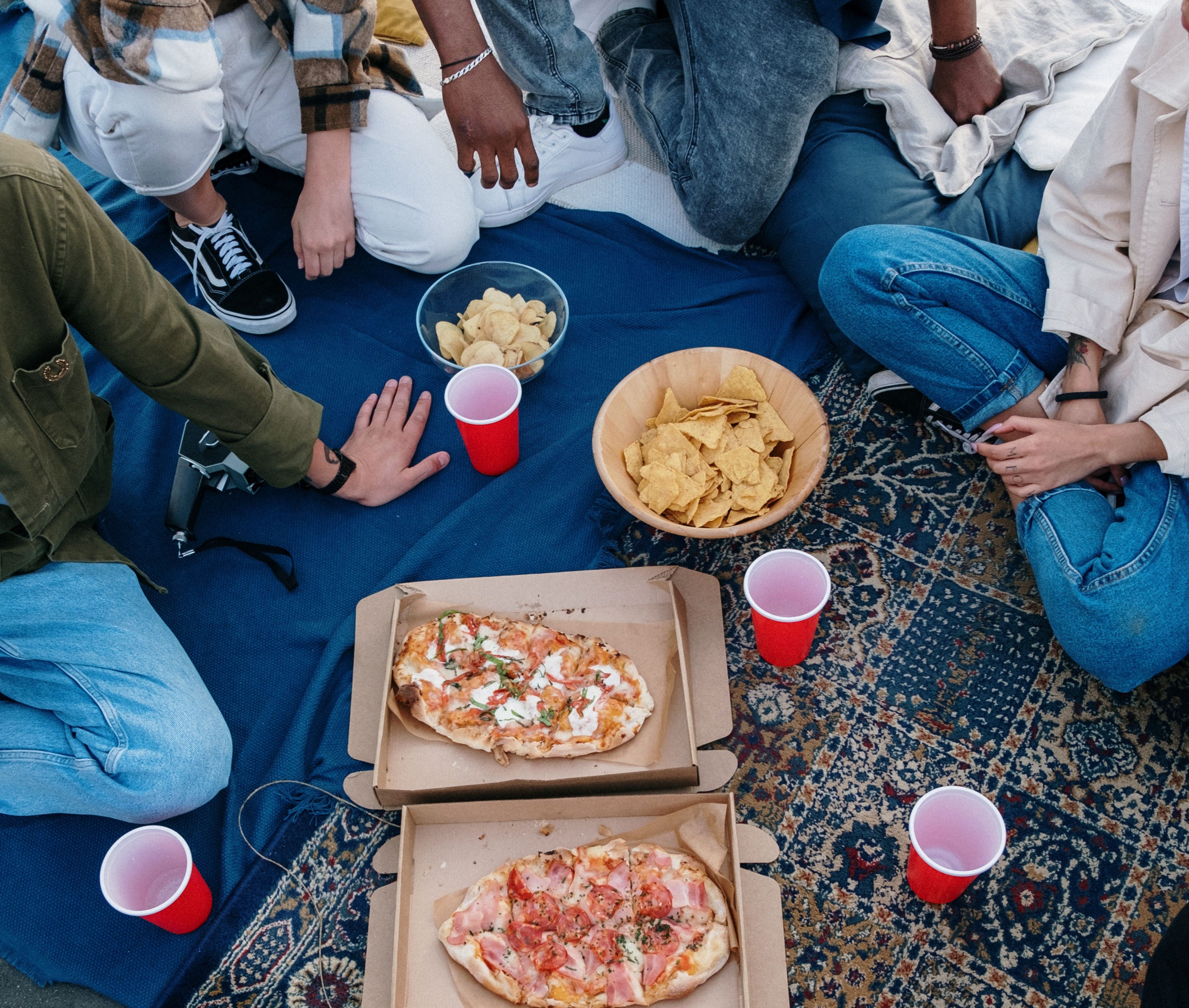
Why does a pizza party look like a striver party? Put a few boxes on a blanket and I imagine the group chat, an afternoon somebody finally got onto the calendar. To paint a picture of a deeper love, why do big aluminum trays do a better job?
A table of trays makes provision conspicuous. There may be enough to send everyone home with dinner for tomorrow. I am invited to picture a morning in the kitchen, although the whole spread could have come from a restaurant.
A pizza arrives with the transaction still showing. The box names the shop. Buyer and seller are partners in the crime of the commodification of food; of homogenizing our tastes and hurrying our lives. The box does not credit who got everyone to show up.
According to Paul Fussell’s Class, the more convenient something is, the lower its class. Bronze doorknobs are classy because someone has to keep polishing them. A master’s inconvenient doorknob advertises that he can leave the polishing to someone else. For a pizza meal, the classiest pizzaiolo is the one on personal retainer.
So, a homemade pizza earns the cook credit and dignity. A servant-provided pizza also foregrounds someone’s respectable labor. But the pizza box itself—that’s evidence of a middlebrow orientation toward commerce and rude transactions.
I will confess to the crime of only being able to afford the work of a skilled cook when I can share his time—while he retains full exit rights—with the rest of the neighborhood. I don’t have to hold his indenture to invite you to dinner. And I don’t have to spend our afternoon in the kitchen. I get to sit on the blanket with you.