


Small-time food stand operators like Cleotilde Juárez were selling chalupas in Queens even in the dark days of 2020 when that activity carried legal risk. When QNS interviewed her about vending reform, she described the fines and criminal-court appearances: “We aren’t assassins or rapists. We are hard-working women.”1
City Council Member Shekar Krishnan and Council Majority Leader Amanda Farías made their case for Local Law 122 through stories of tamaleras (women who sell tamales, or corn cakes), halal food and fresh fruit. Their local law, effective March 2026, removed city vending misdemeanors for food and general-merchandise sellers.
“General merchandise” also covers the male Senegalese handbag hawkers on crowded Canal Street. Unlike the tamaleras, these hawkers are known by residents for aggressive acts like forcing older pedestrians into the street. C.Y., a licensed street vendor, attests to the counterfeiters obstructing access to the licensed businesses.
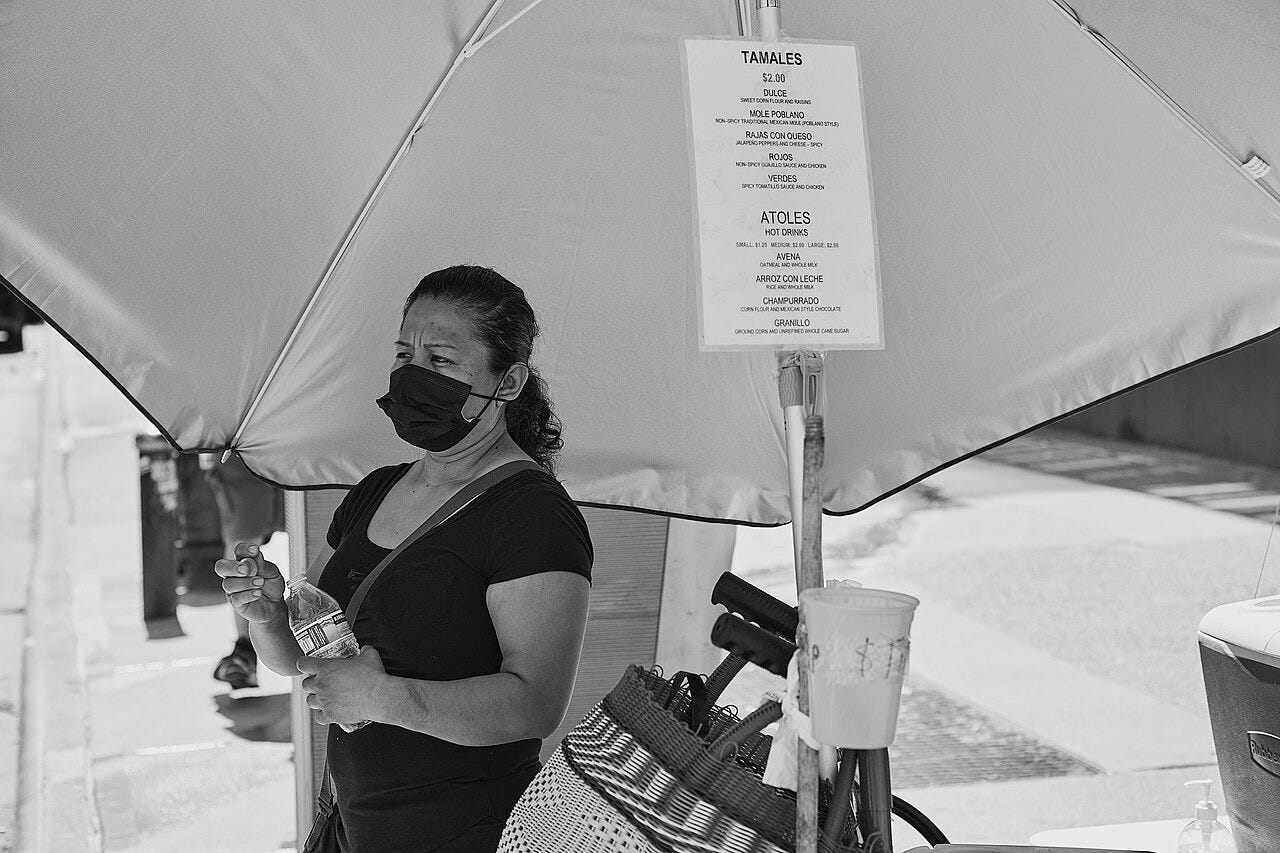
The idealized, sympathetic image of the immigrant woman selling food elides the more banal conflicts between immigrants and between vendors, like C.Y. describes. The city still has civil placement rules, and the state still has offenses for counterfeiting, threats and assault—that address a person’s behavior, not who he is.
At an October 2025 meeting about Canal Street, sanitation official Antonio Whitaker described a “revolving door”: his officers issue civil summonses, confiscate goods, and may return property after payment. Police from the 1st Precinct reported making counterfeit arrests daily and sometimes see the same sellers back the next day.
Canal Street counterfeiters and their allies have also filed complaints against cops using the Civilian Complaint Review Board. These complaints can enter officers’ personnel records and affect assignments and promotions. In the current system, the helper clearing the nuisance is easier to hold accountable than the nuisance itself.
I didn’t conduct this interview but am guessing this is a poor translation of the Spanish word asesina, which usually means “killer” or “murderer” in more idiomatic English.