


At Pier 57, you can sit beside the Hudson with your laptop until 1 a.m., five hours after the food hall’s posted closing time. You don’t need to work there or make a purchase. The space is huge, with WiFi, bathrooms, and a water refill station. Private security is lax about the strict rules governing the space, as I’ve seen teens sleep on the couches.
The building’s richest tenant, Google, occupies the offices upstairs. In 2018, it expanded its lease to include 50,000 square feet on the ground floor for new community amenities, including interactive educational games about local wildlife and a food hall slash incubator for “women- and BIPOC-owned food concepts.”
Rent from the private tenants of this pier helps fund the wider Hudson River Park’s maintenance and operations. Under the lease amendment, the tenant or anchor occupant pays to furnish, clean, secure, and maintain the Trust’s educational space.
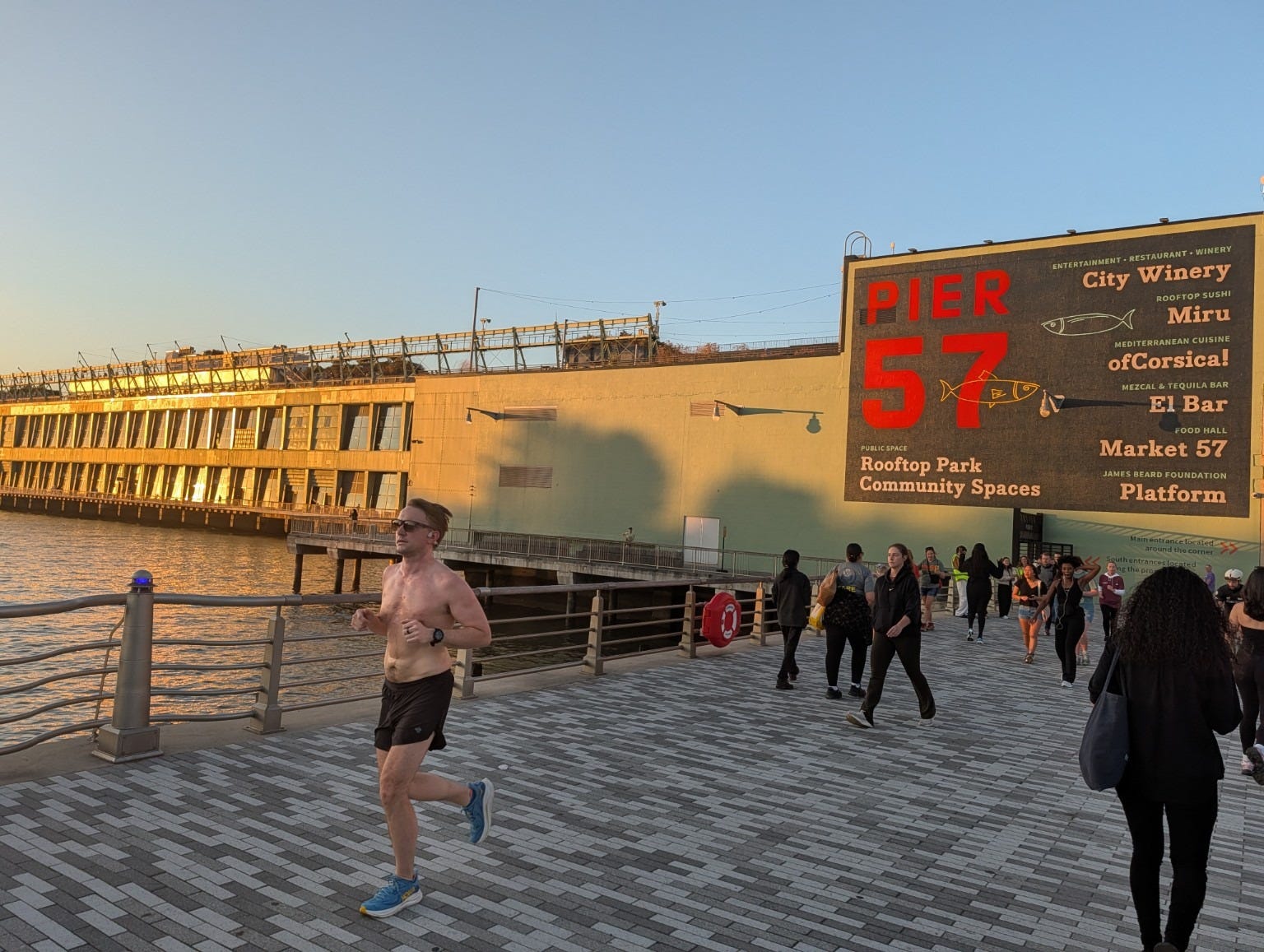
The ground lease has a plan for security failures. On the esplanades and paved areas, the Trust can require inadequate security to be remedied, supply Parks Enforcement Patrol officers if the failure persists, and bill the tenant for its actual costs. An imminent threat to public health or safety permits immediate intervention.
Other models of public-private partnerships for the public good exist. At the Schwarzman library,1 beside Bryant Park’s Bank of America Winter Village, I had my bag searched upon entry and exit, and staff in front of the reading room asked whether I was there for quiet study. The library was sorting visitors by intended use.
Sharon Zukin called the corporate remaking of urban parks “pacification by cappuccino.” Rather than appeal to the aesthetics of rebellion, I like to ask what a stranger can do with a space like Pier 57—and it’s plenty. Google gets its waterfront offices, and we all get somewhere to work without being its employee or customer.
The New York Public Library is a nonprofit corporation supported by public and private money.