


Of all New York City’s five boroughs, none is more politically and psychologically isolated than Staten Island. A decades-long movement for a City of Staten Island won a referendum in 1993 with 65% of the vote, but secession was blocked in Albany.
The five boroughs united in 1898 and soon sat at a Board of Estimate that gave the less populous boroughs overweight power on land use, budgeting and other decisions. In 1989, SCOTUS ruled the system unconstitutional: an offense to “1 person, 1 vote.”
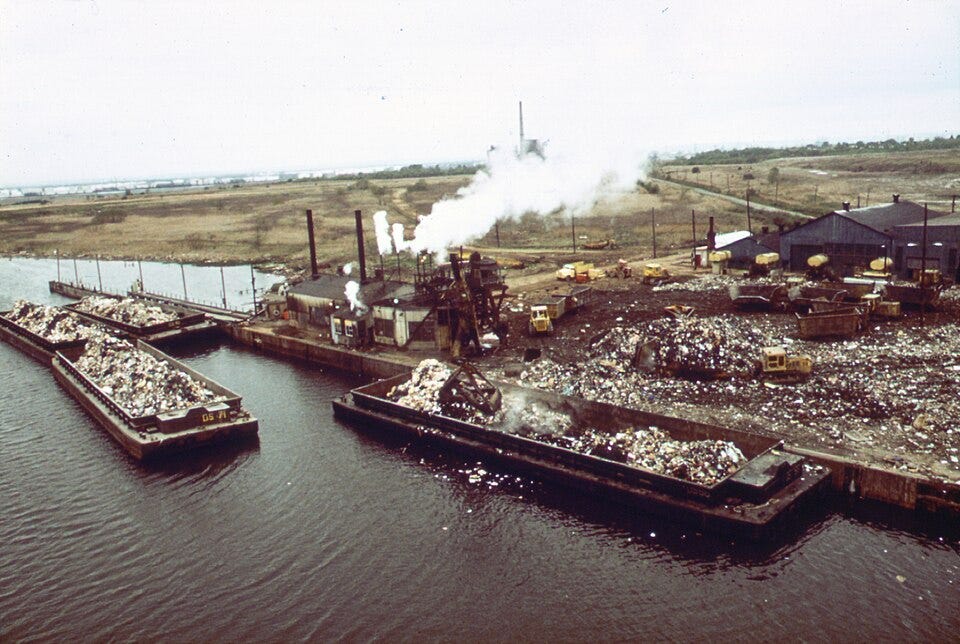
Staten Islanders could literally smell their subaltern status from Fresh Kills, the world’s largest landfill, where the other boroughs sent their garbage. But the more compelling story in citywide and global media cast Staten Islanders as oppressors.
In fact, Staten Island’s biggest soft-power export built its power beyond the island. Wu-Tang Clan emerged from the northern housing projects, pioneering an influencer-like model that broke record labels’ traditional control over members’ solo albums.
In a preview of Trump’s 2020–2024 arc, Rudy Giuliani rebounded from his 1989 defeat to win the mayoralty in 1993, running up the margins among “forgotten” proto-suburbanites. He closed Fresh Kills and the threat of divorce vanished for a time.
The ideal of self-government runs into the reality of “self-government for whom?” Opponents of Staten Island’s secession from New York worried about the fate of black residents on the North Shore. Second-order minorities may prefer distant authorities.
Consolidation offers access. Staten Islanders wanted city jobs without everyone else’s garbage, while Wu-Tang wanted record labels’ distribution without label control over their solo careers. Both won better terms by making their cooperation less certain.