


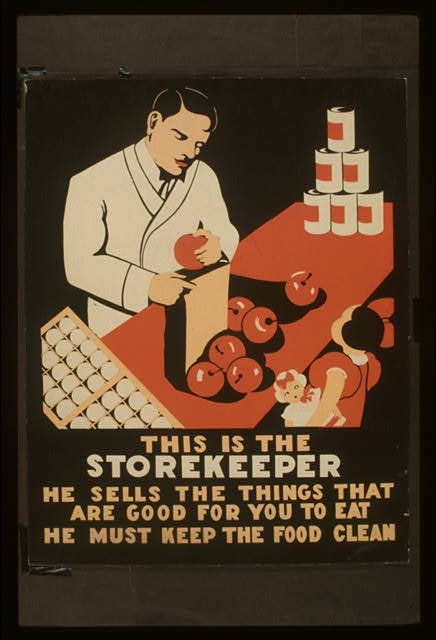
In effect and in process, the jobs of supermarket cashier and food pantry distributor are much the same. Wet and dry edibles move to the pantries of the hungry and needy. During COVID lockdowns, federal guidance recognized grocery workers as essential.
But ordinary commercial greengrocers are not recognized as altruistic workers. Psychologically, the distinction seems to be self-interest. Newman and Cain found the presence of personal gain (like a cashier’s hourly pay) to have a kind of polluting effect on perceived morality of the act, relative to the equivalent, uncompensated work.
In other words, people struggle with the idea that “it is not from the benevolence of the butcher, the brewer, or the baker, that we expect our dinner, but from their regard to their own interest.” Intuitively, the baker’s interest is at odds with our getting fed.
Amy Wrzesniewski’s work on job crafting among hospital cleaners found people with the same formal duties drawing radically different boundaries around the work: some minimized interaction and stuck to prescribed cleaning tasks, while others integrated themselves into patient care and understood cleaning as one part of helping the sick.
These differing frames have become a matter of concern for organizational psychology because they can increase persistent behavior that is thought to have impact. Adam Grant’s experiment found that fundraisers who met a scholarship beneficiary subsequently spent more time on calls and raised more money.
The beneficiary of the cashier’s prosocial work is already standing three feet away, but our vocabulary hides his grace by calling him a customer, so his salvation becomes “customer service.” Had the hungry man approached the right kind of official’s desk, helping strangers navigate something they need might now become public service.
The public is served at both desks. Private sector workers feed, transport, insure, repair, teach, and assist members of the public all day. If calling attention to the beneficiary helps workers recognize the impact of their work, there is little reason to reserve that recognition for people with the right employer. A more expansive and inclusive definition of public service might help produce more service to the public.