


A common criticism of tipping culture is that businesses should pay their workers rather than ask customers to make up the difference. In December 2023, New York City began requiring food delivery apps to meet a minimum-pay rate of $17.96 per hour, excluding tips. So why are we still being asked to tip? Is it merely culture?
DoorDash said the new pay requirement would mean higher customer fees, and moved tipping out of checkout to soften the impact on customers. Uber also moved its tipping prompt. Tipping afterward was still possible. According to the city’s report, average tips on those platforms immediately fell from $3.66 to $0.93 per delivery.
The report calls those changes “design tricks.” We usually hear that phrase when an app steers customers into spending more. Here, the complaint was that customers spent less. The city wanted higher required pay without a responsive decline in tips.
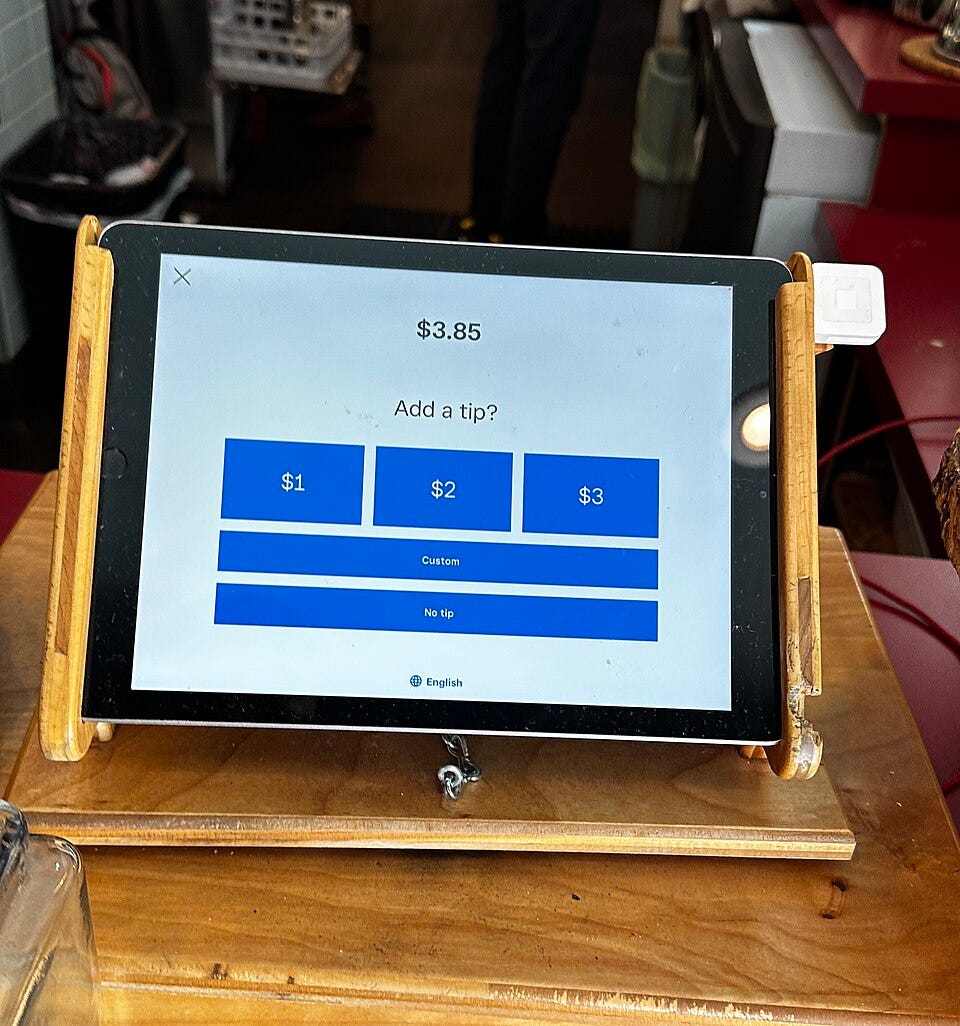
So the Council required the apps to bring tipping back into checkout. Since January 2026, food and grocery delivery apps must offer a conspicuous opportunity to tip before or when customers place an order, including a suggested option of at least 10%.
New York established a pay floor independent of tips, then gave the tip prompt legal protection too. In its own 2022 study, the city had identified interface changes that “discourage or eliminate tipping” as a way to limit the cost to consumers. What it once contemplated as an adjustment to higher pay, it later legislated against.