


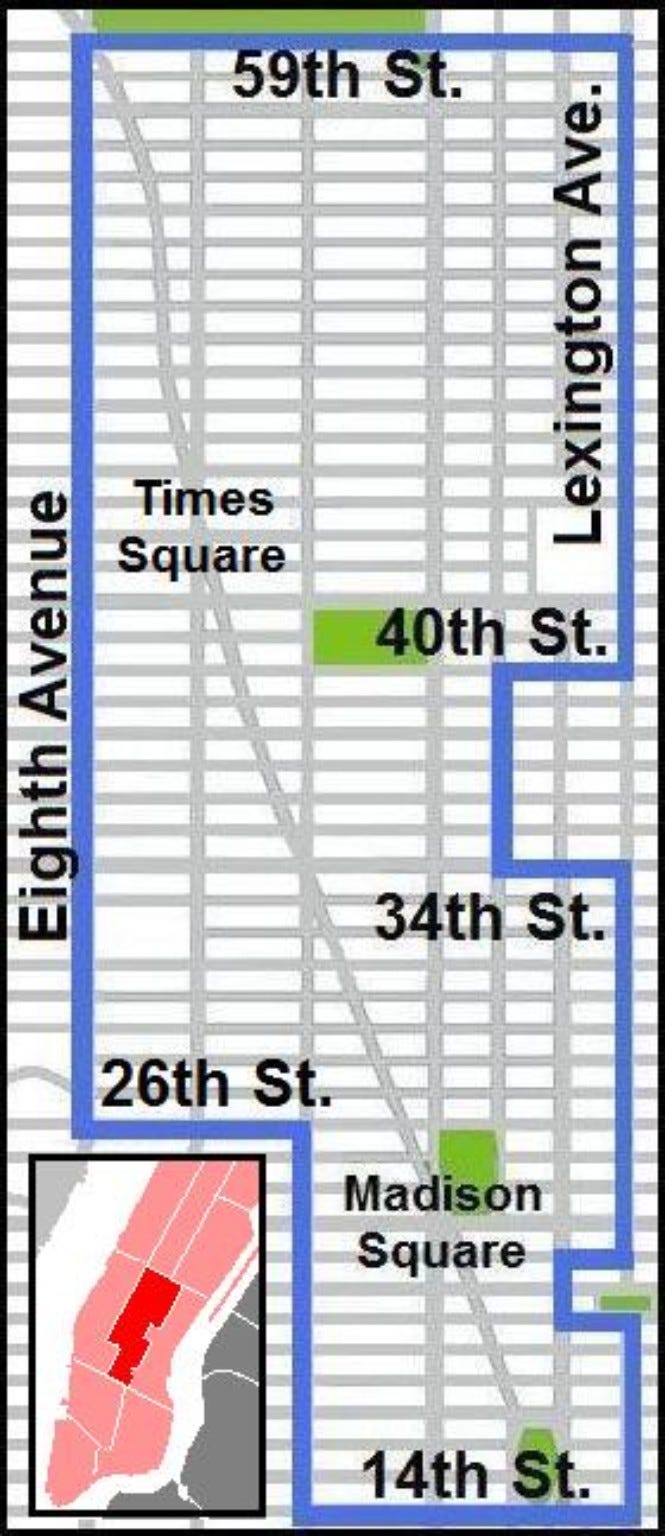
On April 3, 2024, Manhattan Community Board 5 (Midtown, Times Square, NoMad and Flatiron) convened a special meeting after seventeen members petitioned to challenge its new chairman.
They objected to Samir Lavingia’s ties to Open New York, a YIMBY pressure group.
Opponents of Open New York called the presence of four of its members, including Lavingia, an “infiltration” and a “mortal threat” to the independence of the community board. The board ended up voting 21–4 to discard his prepared agenda.
Before organizing around housing, Lavingia had helped build Google Maps.
Among those who resigned to protest Open New York’s presence was Layla Law-Gisiko, a documentary director and journalist who had chaired the land-use committee. The resignations helped make Lavingia chair, allowing opponents to treat the consequence of their own exit as further evidence of infiltration.
The Second Educated Class
A software engineer and a documentary filmmaker may vote for the same candidates and ride the same train to the same community-board meeting. The engineer asks, “How do you know?” The filmmaker asks, “Who are you to ask?”
His laptop contains dashboards; hers contains the relationships that decide what the dashboards mean.
The technical worker gets paid because something works. The cultural worker gets paid for delivering trusted judgment. A technical failure costs too much or predicts badly. A cultural failure misses the context or legitimizes the wrong people.
These are different foundations for authority. The technical worker can point to a performance test that does not require anyone to admire him. The cultural worker has more reason to defend the authority to set the terms of discussion.
One arrived and was called an infiltrator.
The other resigned and returned as a candidate for higher office.