


On October 5, the New York City Council held a rare, 51-member Committee of the Whole hearing on AI risk. Before former Anthropic researcher Jacob Coxon had testified, Speaker Julie Menin thanked him for his “courage and bravery.”
In 1841, John H.W. Hawkins stood before the Maryland legislature to tell the room he had been a drunkard “taken almost out of the gutter.” The Senate chamber listened to the reformer, according to a contemporary source, “with tearful attention.”
Legislatures have long had a weakness for the man who has escaped evil and come back to tell the rest of us what it’s really like. This is a curious preference if the object is knowledge. The people still doing the thing usually have more current information.
What Jacob Coxon, Daniel Kokotajlo, and the handmaidens of Prohibition have in common, then, is a role in a conversion story already written. The reformed prostitute, the ex-gay, the recovering addict, and the AI whistleblower all emerge with “clarity”: they can now see what participation supposedly prevented them from seeing.
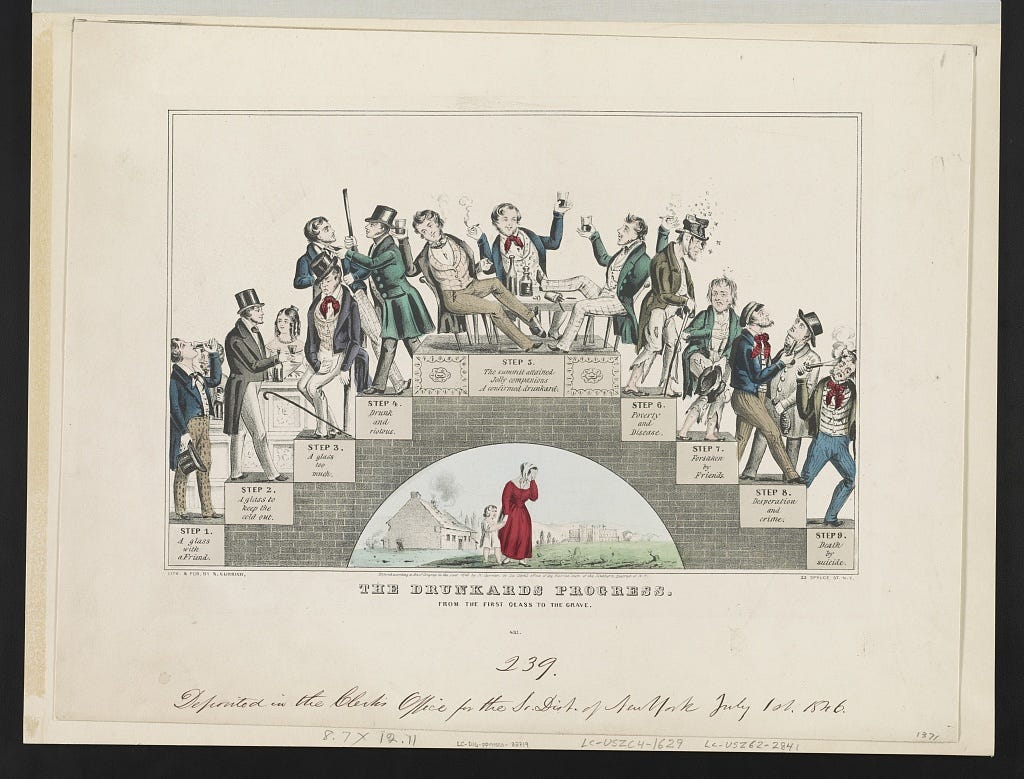
Leaving does not merely change their incentives; in the conversion story, it improves their eyesight. The participant had experience, but the former participant has perspective. The current participant’s position becomes evidence of bias; the defector’s equally selective position becomes evidence of “insight.”
The dramaturgy of the public hearing is that the legislature has already cast the roles before anyone answers a question. The reformer explains the harm; the institution is called forward to answer binary questions. Shelly Palmer named the template during the 2024 Senate hearing on child safety. “Do you support this bill, yes or no?”
The CEOs could endorse child safety, but not honestly endorse every bill offered in its name without qualification. That nuance, which their job requires, then confirms the role already assigned to them in the hearing: as the interested party resisting reform.
Before the subpoenas are ever issued, the defector has already been granted a powerful role in driving legislation forward. Menin’s package even proposed paying future AI whistleblowers a share of penalties recovered from “bad actors.” Brave men are thus encouraged to keep blowing the whistle, loudly, repeatedly, and in public.