


Earlier this month, a street in southern Brooklyn was co-named “Canton Avenue” in recognition of Bensonhurst’s reputation as a kind of Chinatown in Brooklyn.1 Half a century ago, the neighborhood was predominantly Italian. Al Sharpton organized several marches of African Americans from other neighborhoods into Bensonhurst in 1989, declaring: “We are going to affirm our right to go to any community we want.”
Sharpton’s September 2 march was scheduled during the Feast of Santa Rosalia, Bensonhurst’s annual celebration of Palermo’s patron saint. The neighborhood was publicly celebrating its Sicilian identity while protesters arrived to challenge its reputation to national media. The organizer did not coordinate with even supportive locals. His stated strategy was to bait prejudiced residents of the neighborhood in front of television cameras: “I would throw kisses to them, and they would go nuts.”
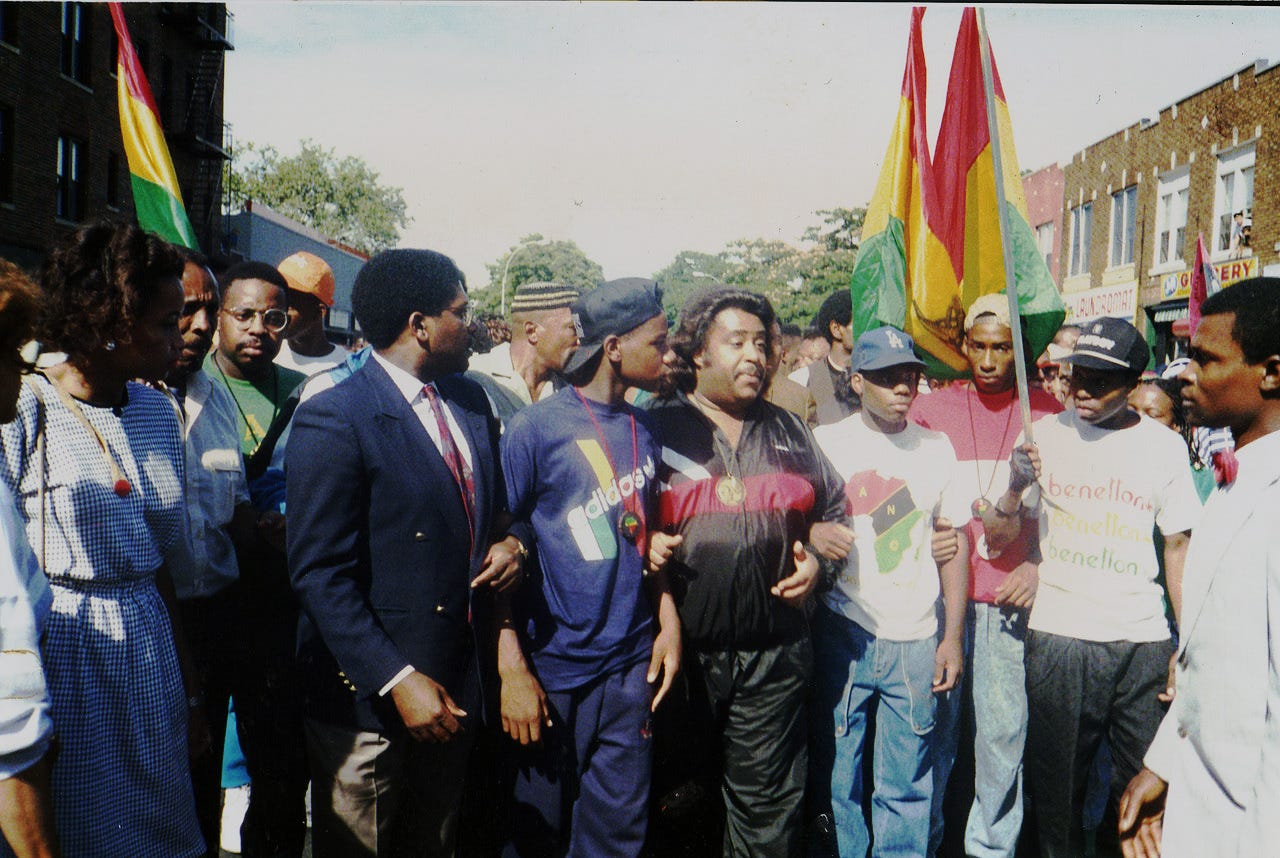

Bensonhursters faced a dilemma: stay home and let others represent the neighborhood, or come out and supply footage that could justify another march? In 1990, a local assemblyman appealed to residents: “Don’t give him the forum that he wants.” His audience objected to retreating indoors while police cleared children from schoolyards and outsiders framed relations between neighbors as a sectarian drama.
New York Post columnist Pete Hamill (the namesake of a street in Park Slope during the high tide of Black Lives Matter) wrote a contemporary study of Bensonhurst under the headline “The Lesson of Howard Beach Was Lost on the Punks of Guidoville”:
The Guido decides early that homework is for jerks. So is work... Go to a library? Read a book? Finish high school? Go to a university? Figget abo't it! Om gonna go work construkshun, eight bills an hour!
The police escort for Sharpton’s parades made the limits of neighborhood authority visible. Residents who considered themselves defenders of Bensonhurst watched officers protect the rights of outsiders. Hundreds could enter together, denounce the neighborhood in the press, and return for another march. The streets looked like the same streets of yore, but the neighbors could not decide who may take up public space.
Brooklyn has Chinese-American commercial corridors, but Bensonhurst and Sunset Park’s Eighth Avenue are less intensely built than Manhattan’s Chinatown or downtown Flushing, Queens. Comparing roughly one-kilometer squares around these centers, city tax-lot data show approximately 1.5 and 1.4 square feet of building floor space per square foot of lot land in the Brooklyn samples, versus 4.8 in Chinatown and 2.5 in Flushing.