


It is a truth universally acknowledged, that a Bushwick or Williamsburg creative in possession of a good idea for a third space must be in want of cheaper rent to realize it, somewhere along the vibrant northern borderlands of historic Bedford-Stuyvesant.
On a cool summer day, 74°F (23°C) to be exact, I went to patronize a board-game bar there and passed by what could have been a scene from Sesame Street or The Godfather. A fire hydrant stood open without a spray cap attached. Maybe children played there!
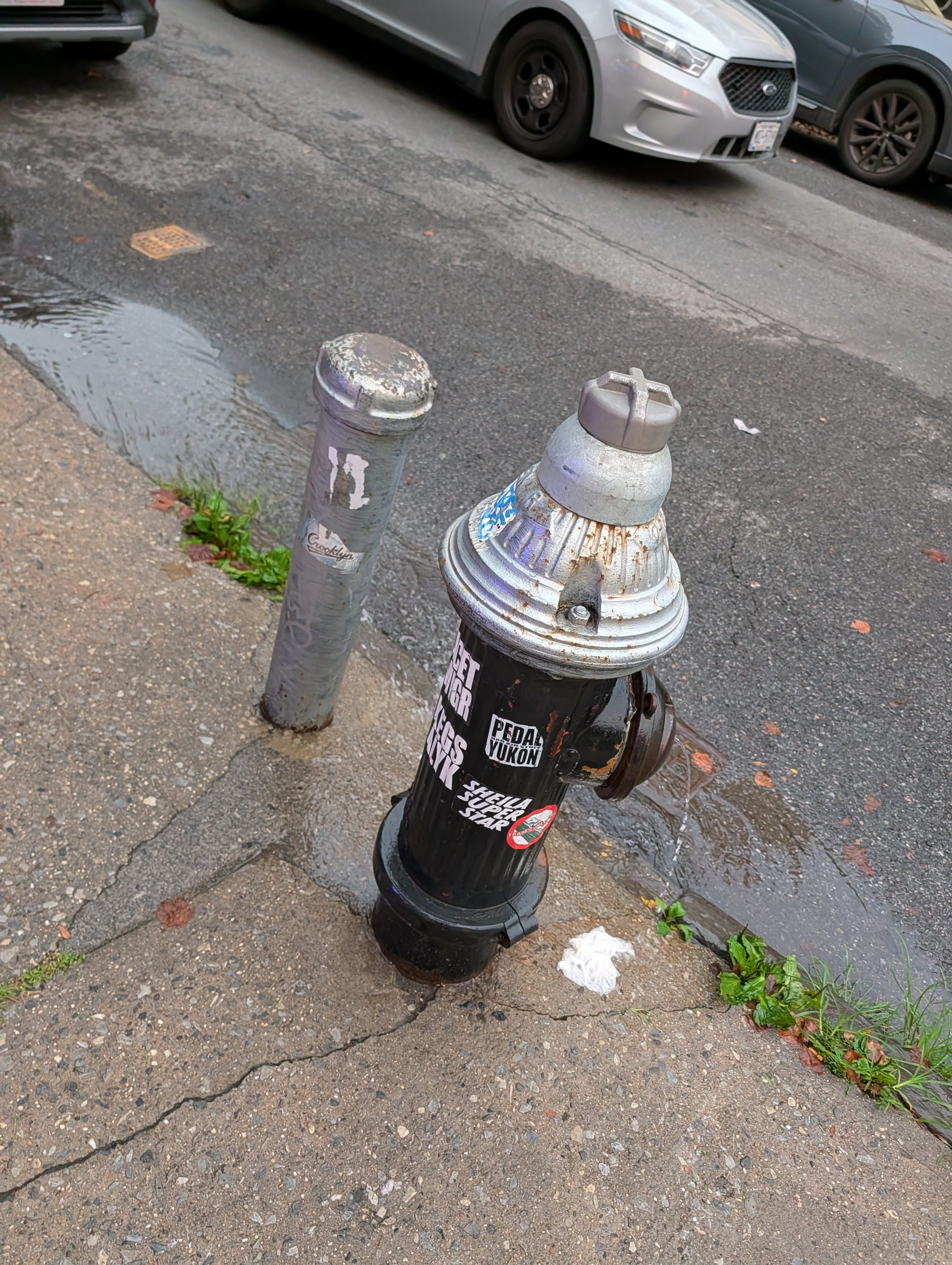
Before fire hydrants gave firefighters quick access to pressurized water mains, urban fires were harder to contain, more destructive, and more expensive. Today, hydrants sit idle most of the time by design. They provide reserve capacity to save future lives.
Reserve capacity is fragile because the people who want to use a public resource now don’t need to consult people who may need it later. Charles Fain Lehman calls this “domination of public space for private purposes,” like blocking several subway seats.
The family whose building might catch fire later did not get a vote on whether to turn firefighting infrastructure into recreation. The city may not even know when this conversion happens. It asks witnesses to report running hydrants through the 311 app.
Reports like these are a tiny act of state capacity that returns a public resource to the whole public. New residents can improve neighborhoods by asking whose interests are overlooked by local traditions, including those of people not yet in the room.