


Young adults with limited money trade privacy and floor space for access to New York City. They did it in five-cent lodging houses in the late 1800s and do it in Bushwick group houses today. Accounts of danger and misery omit what residents bought with the sacrifice: a cheap foothold near work, customers, and useful acquaintances.
At the end of the Gilded Age, Progressive reformers used police statistics and flash photography to scandalize elites with accounts of New York’s tenement squalor. They presented the slum not merely as an unhealthy building but as a machine for producing backwardness, broken families, and future criminals.
Jacob Riis’s 1890 photojournalistic exposé How the Other Half Lives became the canonical statement of this case. It helped build support for the campaign that produced the Tenement House Act of 1901. Fifteen years later, the ambition to regulate urban form widened from the room to the city: New York adopted the country’s first comprehensive citywide zoning resolution.
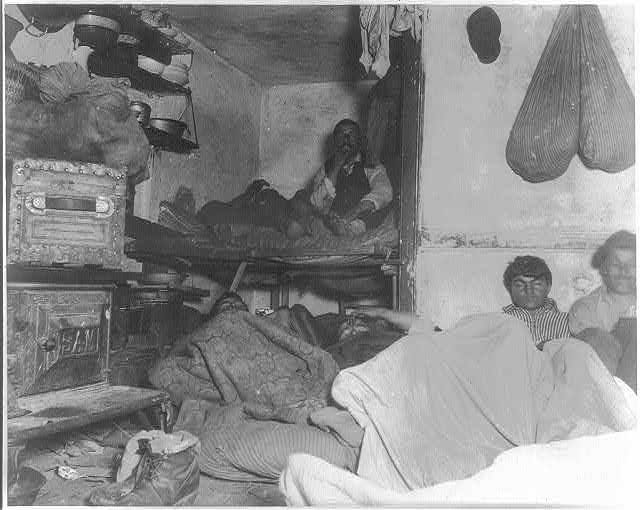
Riis’s descriptions of ethnic groups have become embarrassing. Unfortunately, his method has not: show respectable readers housing they find intolerably crowded, then treat a ban on building or leasing this cheap housing as compassion or social progress.
New York’s housing code still contains a section titled “Conversions to rooming units prohibited.” Single-room occupancies once provided inexpensive housing for people unable to afford conventional apartments. The city grandfathered the old rooms and banned their successors.
The demand moved outside the permitted housing stock. New Yorkers subdivide apartments, rent basements and fit more people into houses than the certificate of occupancy allows. The city calls these arrangements illegal conversions.
New York has always attracted people before they could afford a conventional apartment. Cheap rooms let them enter before they could afford much space. Prohibiting those rooms does not make newcomers richer. It is leveling down at the city gate: when poor people or immigrants cannot afford the housing reformers consider acceptable, the law takes away the housing they can afford.