


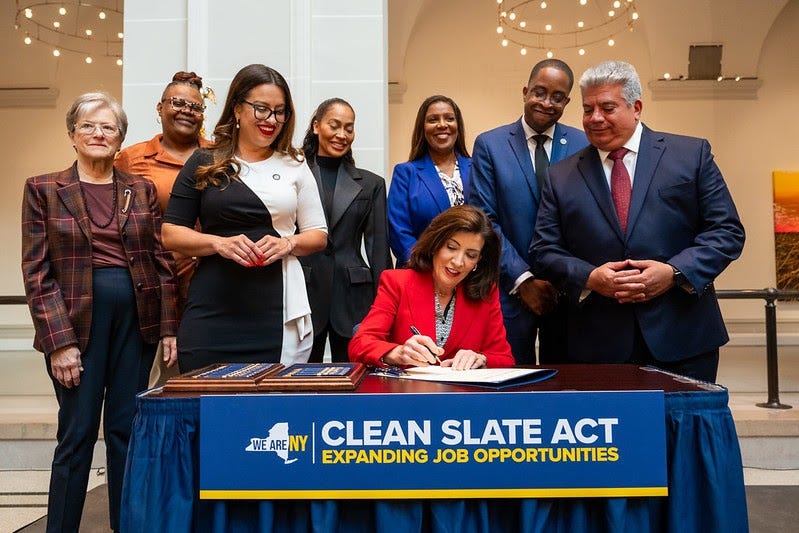
On June 9, 2023, Assemblymember Catalina Cruz explained why she had agreed to sponsor New York’s Clean Slate bill. A crime victim herself, she had been unsure she could “relate to people who have committed crimes.” Meetings with families, children, and grandchildren brought to her by pressure groups changed her mind.
Cruz named the Center for Community Alternatives (CCA) among the organizations she thanked, and dedicated her vote to its organizer Marvin Mayfield. She recalled calling Mayfield—who had a criminal record—after the bill failed the previous year, to apologize to him. Mayfield urged her to keep fighting. In November, Clean Slate became law, providing for eligible conviction records to be hidden from public view.
In A Criminal Convict Has a Family, I described how a prosecution can reorganize a household’s money, calendar and expectations. The family has reasons to care about prison conditions, release dates and the rules governing employment afterward. Organizations like CCA translate this passion into political power.
CCA’s 2025 organizing report records 500 New Yorkers at its “Free Our Moms & Kids” rally in Albany, demanding opportunities for earlier release. By session’s end, it counted 31 Senate cosponsors each for Second Look and Earned Time. Neither bill passed that session. The constituency remained organized for the next one.
The work even happens behind bars. CCA says Thomas Gant helped draft its sentencing legislation while incarcerated, then became one of its organizers after his release. How do convicts author the rules under which other people are sentenced? Criminal justice reform organizations supply the route between those roles.
The stranger who might be attacked tomorrow has no comparable infrastructural readiness. CCA already has names, contact details and a next meeting. By the time a proposal reaches the legislature, its constituency has been preparing its case for years.