


Before the 1989 U.S. Supreme Court decision that reorganized the New York City government, the city’s politics were organized through a chain of people who knew each other much more intimately than they do now.
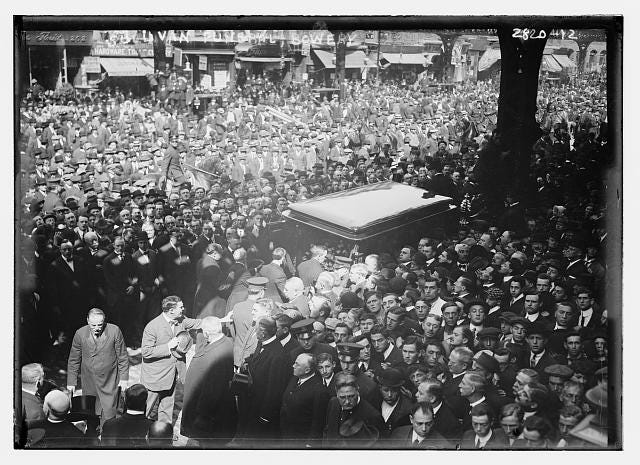
Although “Tammany Hall” is vaguely understood to mean “corruption” today, many contemporary New Yorkers associated the organization with warm community leaders like Timothy Sullivan.
Beginning during the depression of 1894, “Big Tim” Sullivan served enormous Christmas dinners from his Bowery clubhouse, with his election-district leaders supervising the distribution. He found jobs for unemployed men, posted bail, and handed out shoes and socks. Ordinary working people really loved Big Tim.
A distant, citywide Democratic Party could not know that your family needed coal or your son had been arrested. But a neighborhood captain could! They carried these requests upward to district leaders like Big Tim, who could fulfill them. The mutual backscratching ran through the district and county organizations, ultimately reaching borough hall.
This hierarchy fed into the Board of Estimate, where elected borough presidents sat alongside three citywide officials and exercised powers divided today between the City Council and mayor. It was part of the personal, brokered government that Robert Caro described in a 1974 excerpt from The Power Broker:
In addition to being able to tell contractors whom to hire, borough presidents had direct appointive power over hundreds of laborers’ jobs and hundreds of administrative and bureaucratic positions as well. The county machines were embedded in the community.
Because each borough president cast the same number of Board votes despite vast differences in borough population, SCOTUS unanimously ruled the structure unconstitutional. The resulting City Charter abolished the Board, enlarged the City Council and transferred much of its budgetary and land-use power to representatives elected from equally populated districts.
Today, a New Yorker can bypass the party organization entirely. He reports a broken streetlight to 311 or asks his council member’s office to pursue the resulting case with an agency. The council member may still intervene, but the service is formally attached to a complaint number, not to anticipated loyalty to a Big Man.
This is the bargain of cold, impersonal government: the same request is supposed to receive the same treatment whether or not anyone knows your name. Big Tim knew your family. The modern city tells you to take a number and have a seat.