


On January 1, 2017, the Q train began serving three new stations along Second Avenue: 72nd Street, 86th Street and 96th Street. Researchers estimated the new stops raised nearby property prices by 8% relative to comparable units on the Upper East Side.1 Why should a new subway make an old apartment more valuable?
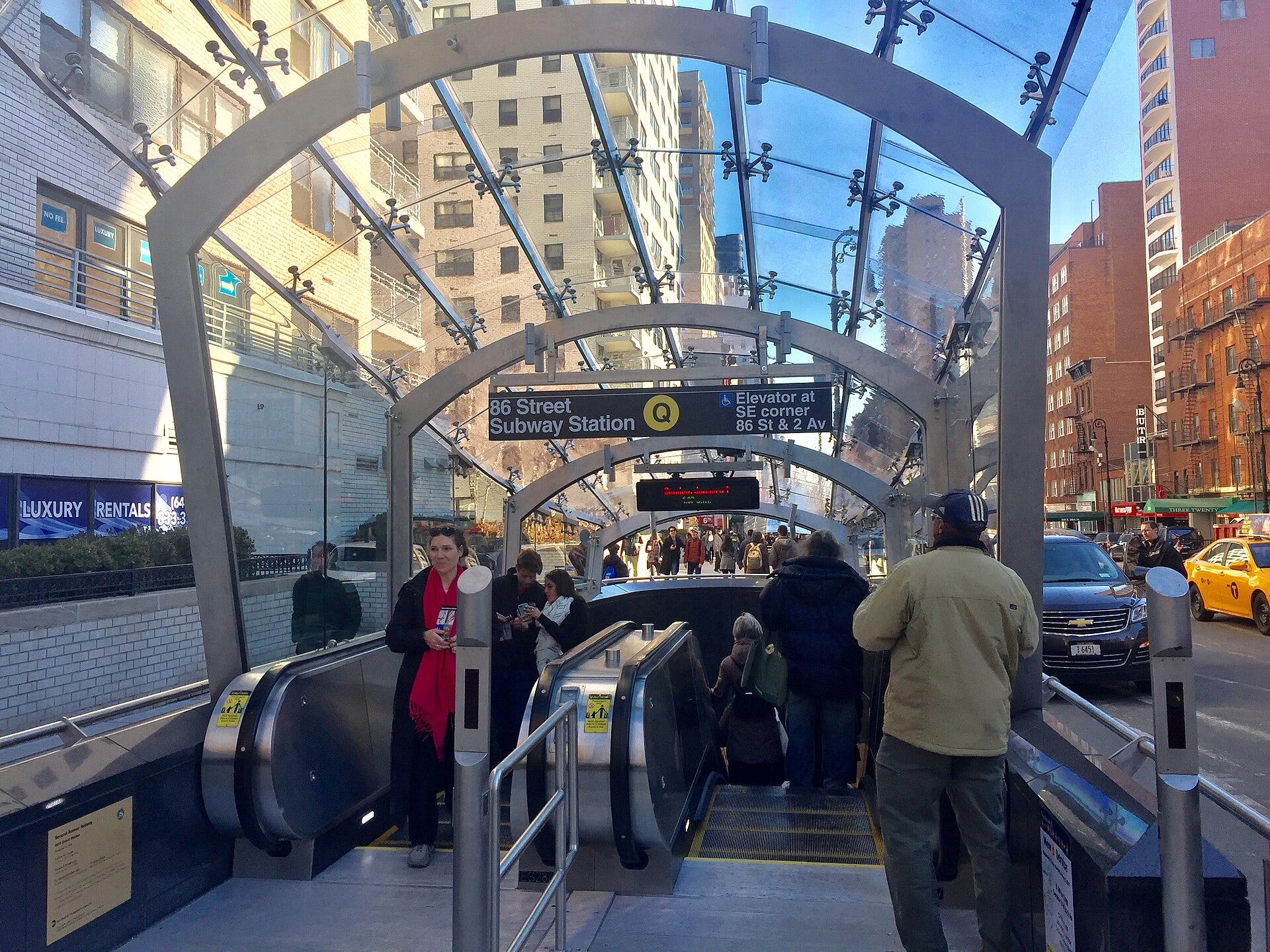

A nearby station changes the life you can lead from its front door. Which jobs are a realistic commute? Who can you see after work? What can you do spontaneously? These benefits contribute to what economists call2 “land value,” as distinct from the value of building improvements like a newly renovated kitchen or bathroom.
Renters and buyers pay for both the building and its land value. To separate the two, imagine how much of the price stays with the house if you picked it up and moved it somewhere else. Property appraisers can estimate this using the “cost approach”:
What did the buyer pay for everything? The house and its lot sold for $2 million.
How much is the house itself worth? Building a new one would cost $1 million.
But the house isn’t new. Deduct $200,000 for its age and wear in this example to leave an estimated building value of $800,000.
What’s left for the location? Subtract the $800,000 building from the $2 million purchase. The remaining $1.2 million is our estimate of the land value.
Another approach to estimate the same thing is called “sales comparison.” Appraisers will find an empty lot nearby with similar space and permission to build a similar house. If it sells for around $1.2 million, that supports our estimate of the land value.
“Location, location, location” has a price. The Georgist case for taxing it is that current property owners collect for improvements other people made. The city brought the Q closer to the apartment, and the landlord got a more valuable address without doing much. But you don’t have to support a land value tax to find the distinction useful. Once we separate what the building is worth from what people will pay to be there, we can ask whether the building makes good use of the location.
Arpit Gupta, Stijn Van Nieuwerburgh and Constantine Kontokosta, Take the Q Train, Journal of Urban Economics 129 (2022), Table 3 and section 6.1. They adjusted for bedroom count, building age and whether there was a doorman, among other differences.
“Land” is a confusing and unhelpful name, in my opinion. It evokes agricultural acreage, when much of what makes an urban location valuable is access to human accomplishment. “Proximity to people you want to be near” makes this concept clearer, but raises the politically sensitive question of whose presence makes a place more or less desirable.