


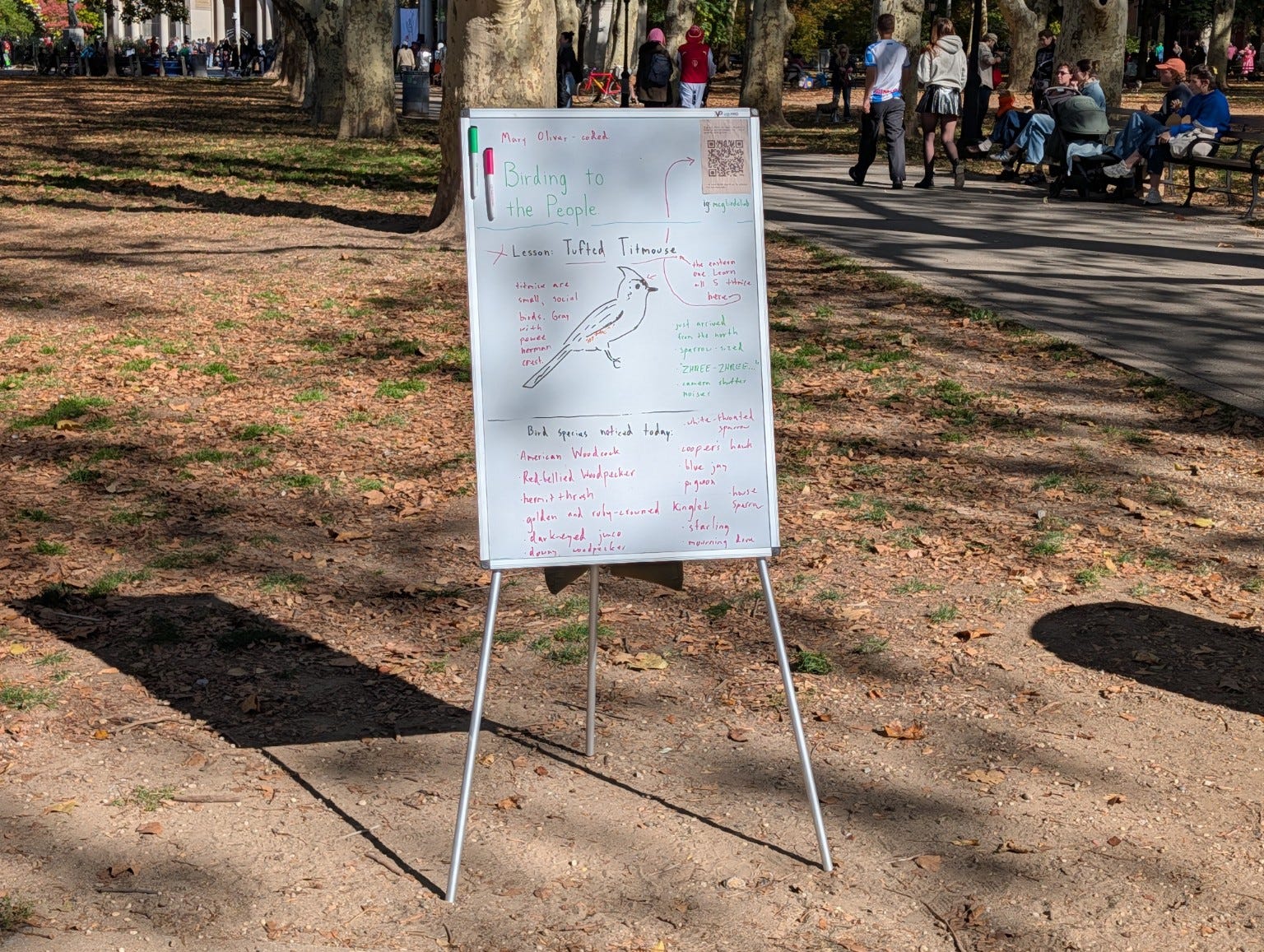
Every Saturday at nine, people gather in McGolrick Park in Greenpoint, Brooklyn, to watch birds. Started by San Francisco transplant Michael Lombardo, they averaged 85 participants in 2025, with one in five attending for the first time. You can just start a birding club. A neighborhood volunteer group helped this one get a grant for binoculars and books.1
A good start to having fun and increasing connectedness is to throw a house party. In New York City, partying in a park is an opportunity to feed two birds with one scone. By taking up space at a public venue, you bring good-hearted people to the friendliest, most local version of politics. To passers-by, your good time is an invitation to a more generous vision of public life.
But why should ambitious professionals who have the option to gather at a converted loft introduce variance into their leisure hours for some abstract public virtue?
When you skip public hearings and opportunities to comment, you leave more room for people seeking to turn their preferences into everyone else’s restrictions. They speak under the banner of “the community” or the royal “we,” treating prior arrival as authority over who gets to move nearby and what everyone gets to do in shared spaces.
To make this concrete:
At the Brooklyn land-use hearing I attended, a proposal to build 1,500 apartments prompted objections about who ought to live here, like “We don’t play pickleball.”
Programs like Open Streets which promote the sharing of public streets to non-motorists for ten hours on a Sunday get complaints like “we never dine outside.”
After volunteers brought a free disc golf course and lessons to Queens, opponents organized to move the course to a “more appropriate area”—the literal periphery.
McCarren Park on the Greenpoint-Williamsburg border shows another, radically inclusive model of belonging. Within weeks of moving to New York, Molly Mearns found North Brooklyn Runners on Google. Six months later, she was co-leading a weekly run; the following year, she became treasurer.
Now Molly has a crew who shares her love of running, and likely her enthusiasm for an active, welcoming neighborhood. When less friendly forces insist that street parking matters more than a marathon (or trash containerization, or block parties), she can rapidly mobilize neighbors who might have something to say about that.
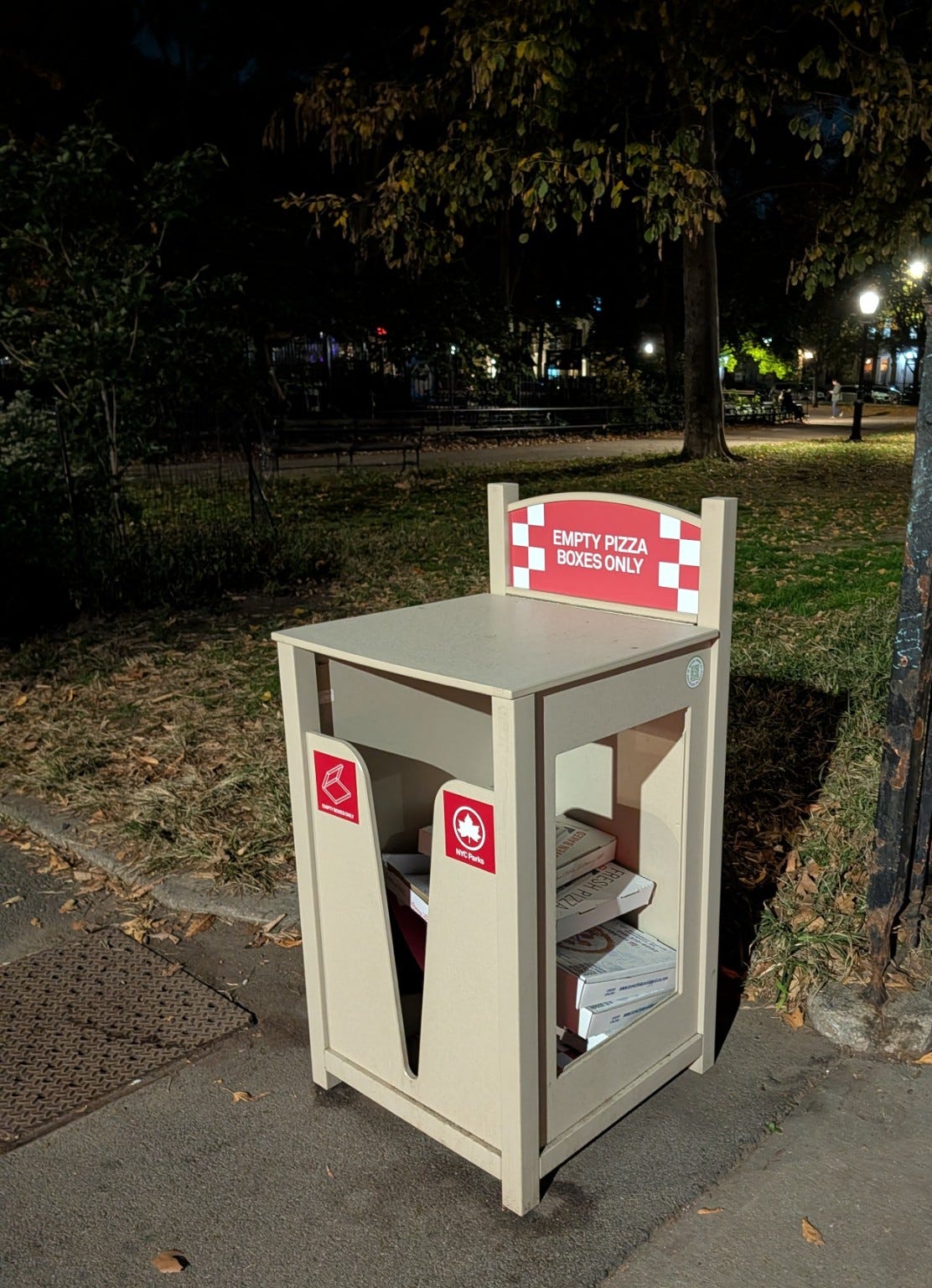
Back at McGolrick, the same volunteer group that secured binoculars for the bird club also helped bring in dedicated recycling containers for empty pizza boxes.2 Because a park where you can throw a pizza party should have somewhere to put the boxes. Because people like Molly care enough to leave a campsite better than they found it.
I’m recognizing people who volunteer to pick up trash as a type. This caring type has historically been only a fleeting presence in local politics, where entrenched groups reliably fight for their own slice of the pie. But you and your birding buddies can show up to grow it, including for people who haven’t arrived yet—for abundance.3
Lombardo, a self-described introvert, began by introducing himself to volunteers publicizing park activities at a farmers market. He committed to consistent weekly meetups, from the two-person beginnings to the community institution of today.
Partnerships for Parks can help you organize a group of your own.
Where will your story start?
Lombardo moved from San Francisco in 2021 and began the walks in 2023. Friends of McGolrick’s 2023 NYC Green Fund grant funded additional binoculars and reference materials for the bird club, along with a nature-walk series.
Friends of McGolrick organized a “dedicated pizza box recycling containers” Gofundme with Parks support.
The abundance agenda seeks to overcome artificial scarcity of goods and services by changing rules that constrain their production. That requires building homes and power infrastructure, even when those already served would prefer nothing change.