


Six items were on the docket at the Brooklyn’s Borough President October 2026 ULURP hearing. The first five items took about 70 minutes altogether—mostly developers presenting zoning maps and floor plans, and one tepid protest1 over the expansion of a Muslim community center in Bay Ridge on the site of a former church.
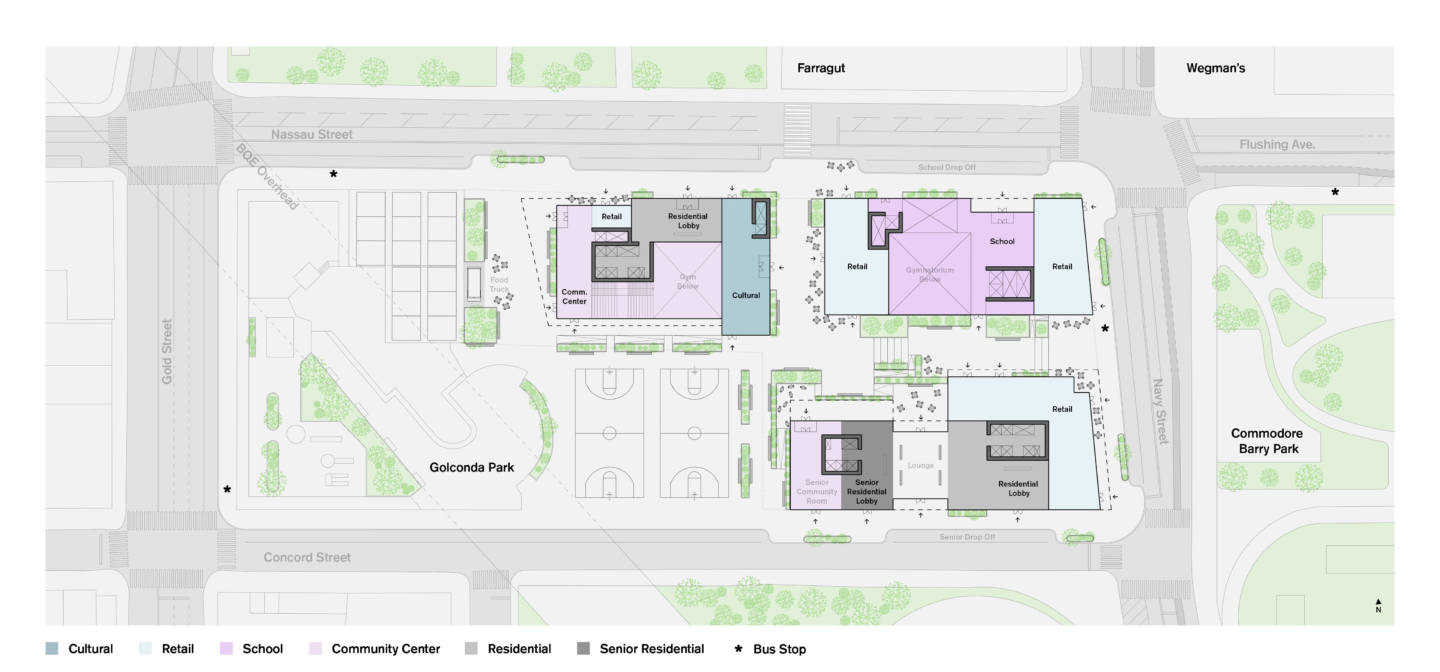
The last item, a proposed development at 240 Nassau Street, took another 130 minutes, including over 40 public testimonies at a 2:1 ratio of supportive to opposed. The proposal was for 1,500 apartments in Downtown Brooklyn, with 300 of them having income-restricted rents, plus an African art museum and other amenities.
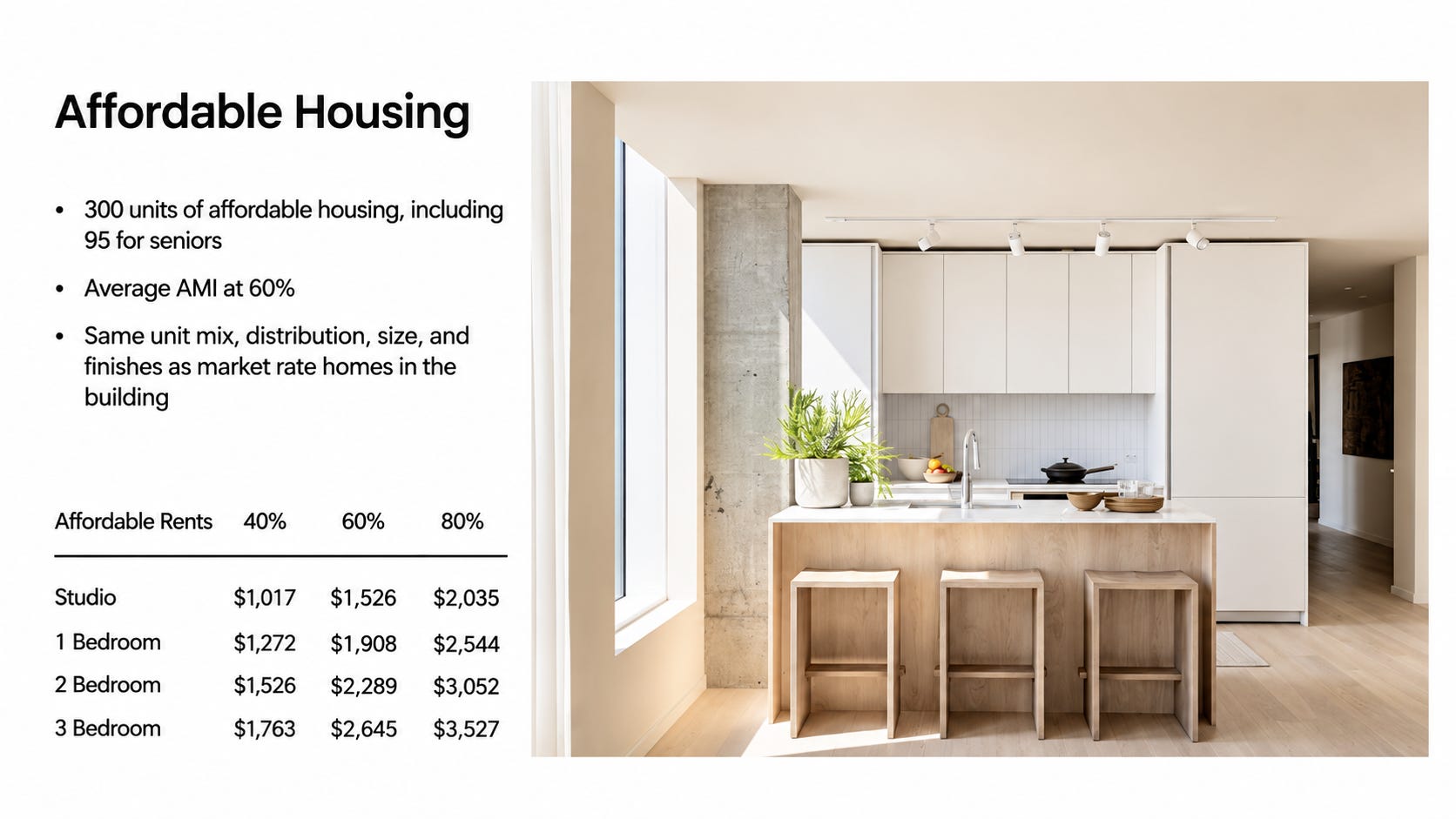
Alloy Development bought the Boys & Girls Club property for $15 million in 2023, helping fund a bankruptcy settlement over child sexual abuse claims, and contributed another $2 million to restore after-school programming.
In 2025, the NYC Educational Construction Fund selected Alloy to redevelop neighboring P.S. 287. Their plan for housing, community facilities and a replacement school required rezoning both sites through the city’s lengthy land-use review process.
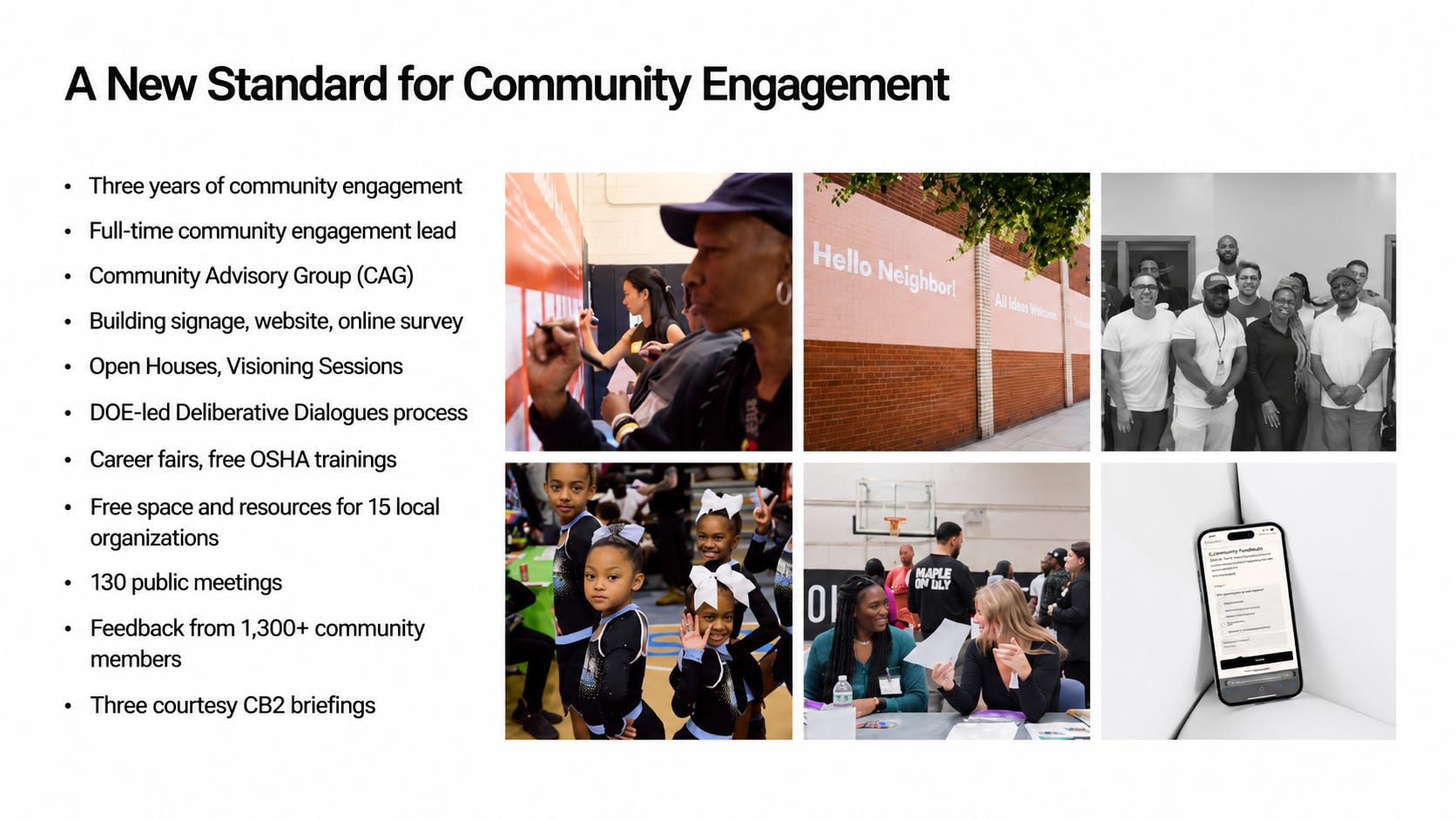
After winning Community Board approval,2 the next hurdle to clear was Borough President review. Supporters and opponents showed up in force, many with the 32BJ SEIU building-service workers’ union or from NYCHA’s Farragut Houses.
Who is We?
The loudest testimony focused on who gets to live in Brooklyn. Christopher Haynes3 described moving from Bedford-Stuyvesant to Fort Greene for “familiar faces and familiar culture, familiar people.” He wanted fewer studios and one-bedrooms:
That is a transient community that comes through, and then they get together, they form their own family, then they move out. So that’s not community building.
Across both sides, speakers judged the development by what it would offer their children. Haynes wanted families to stay amid recognizable faces and culture. Objections to housing types slid freely into objections to their imagined occupants. Haynes demanded the power to make “our standards” of who belongs enforceable:
So I am against this until the corporations that are building this and organizations that are part of it can tell me what power I have as a community member to veto any action that does not meet with our standards.
Carolyn Robinson, a civil servant, declared “we don’t need a 70-something-story building” and questioned why supporters who no longer lived nearby should have a say. Her own history was also one of moving, so the boundary of “we” did not follow neighborhood lines, but it did follow her preferred foodways and folkways.
I’m not from Fort Greene. Born and raised in Bed-Stuy, abandoned buildings, poverty. It was bad there. But now, the same Bedford-Stuyvesant I grew up in, I can’t even afford a room there.
We can’t even afford to live in places that we grew up in because now Brooklyn is the best thing since sliced bread. And now everybody’s rediscovered Brooklyn because they don’t want to commute. They don’t want to take the Long Island Railroad and pay for that. They like the benefits of the bus and the subway. Everything there, taxes are pretty low, homeownership taxes.
But we can’t afford to live well. We can’t afford to shop at Wegmans. The new supermarket that’s there, it’s not for everyone. So we’re not saying that we oppose the change. But when the people come to the area, they make us uncomfortable living there. You know, we have to turn the music down. There’s pickleball coming to a park. We don’t play pickleball. So when they come in and make the changes, it’s not for us.
Haynes’s undesirable neighbor is childless and lives in a studio or one-bedroom. Robinson’s shops at Wegmans, plays pickleball in the park, and prefers quiet and a shorter commute. Living near such people makes Robinson “uncomfortable.”
Shanique Pass, a former P.S. 287 student, opposed relocating its students for the redevelopment. She called the school “our little slice of America”:
As we witnessed the banning of books and the erasure of Afro-descendant history and presence, i.e. gentrification, will we continue to allow others to determine for us, or will we exercise our human right to self-determine?
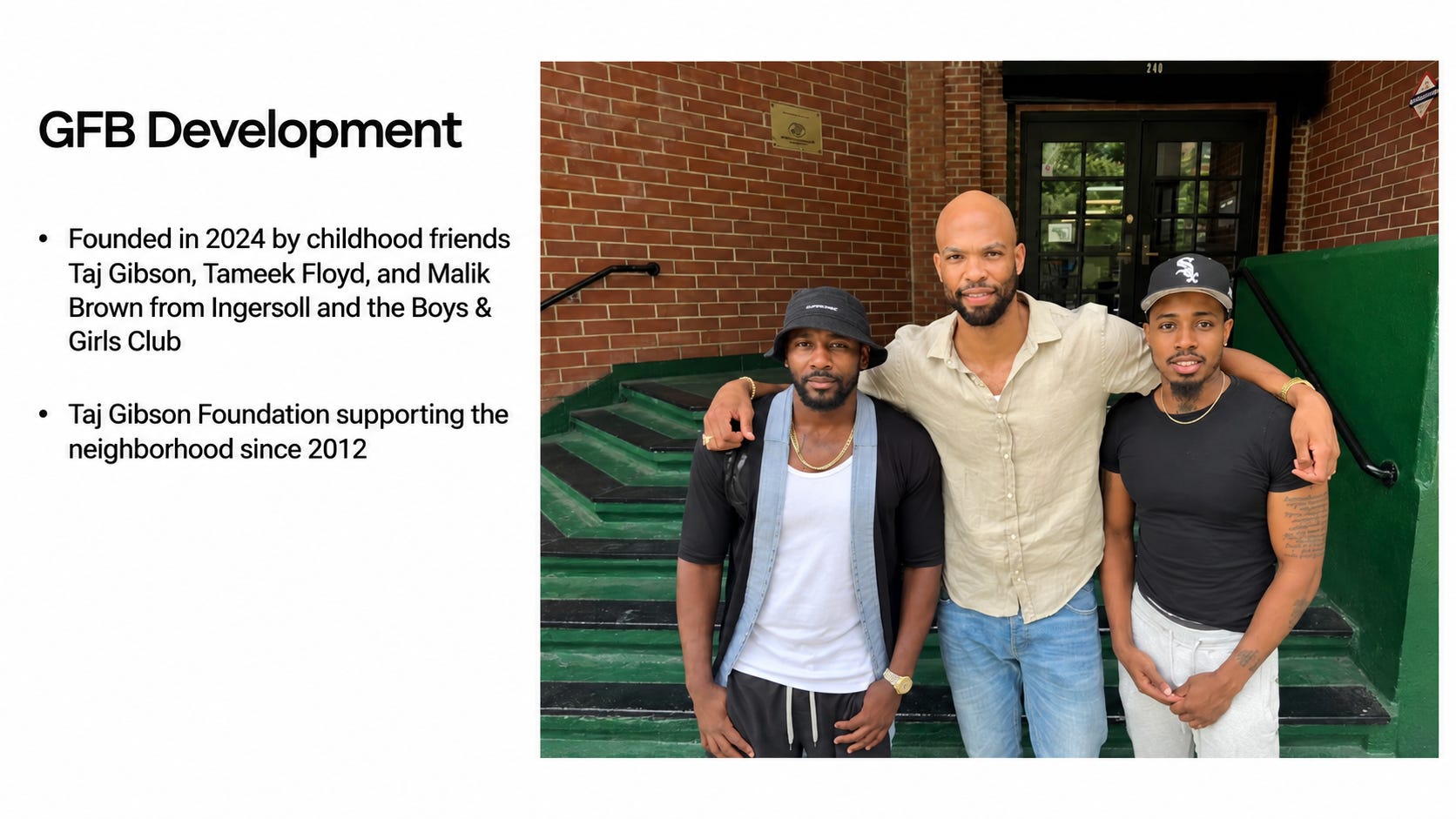
Supporters also spoke in terms of “us,” but disagreed about who was on their side. Shalik Grant praised childhood friends Tameek Floyd and Taj Gibson, who had grown up in nearby Ingersoll Houses and were now helping develop the neighborhood:
Two decades, a lot of developments came here. I haven’t seen not one Black brother or Black sister from our community be at that table. Here we are right now.
Grant now lives in New Jersey. He was one of the former residents Robinson thought should have less say. For him, moving away did not mean leaving “us”:
I believe in their vision. And I’m not saying this—nobody forced me to come on up here. I didn’t have to come on up here. I live in Jersey. I still love my community. I’m still coming back to my community. And I know they’re still coming back to our community.
Shayla Michelle spoke next. She reframed Grant’s seat-at-the-table uplift story as outsiders using trusted Black men to sell projects that would price Black families out.
And what hurts the most is that the strategy that the developers used against us—they come to the neighborhoods and then they use our Black men. They put them in suits. They make them go around and make them become the face of projects that will ultimately price our families out.
We cannot afford to be fooled by the familiar faces.
After the in-person testimony, Jorge Romero spoke via Webex. He asked existing residents to consider the people who could become their neighbors. Not just as threats or tools of evil developers, but as people whose lives and wellbeing mattered.
I just want to, I guess, be a different type of voice. I am living in downtown Brooklyn, as I mentioned before. I live in a market-rate new build with my two-year-old daughter, who is taking a bath next to me right now, and my four-month-old daughter. And our community school is 287.
And I mean, I think I know a lot of people are from NYCHA and are concerned about the type of neighbors that are coming there. But I think they should step into the view that they’re the incumbents right now, and they’re blocking housing.
Back in the day, people would block the NYCHA development, and they would oppose them, and they would not have a place to live.
Also, the point of housing is for people to live there. It’s not about all the benefits.
By this point, much of the debate over 240 Nassau Street concerned the cultural fit and lifestyle choices that would make future Downtown Brooklynites one of “us” or “them.” Romero brought the focus back to people who needed somewhere to live.
I had come to hear about rezoning from R6 to C6-12. I left with a much more concrete understanding of “exclusionary zoning.” The proposed towers gave people an occasion to gather and affirm who they were. Taller buildings threatened to expose the children—the future of the community—to pickleball players from Long Island or New Jersey.
Five speakers supported the center, including its executive director. The only challenge came from Allison Greaker, a resident who said she had found an 1835 deed in a book stipulating that the property revert to the original owners if it ceased being a church.
Brooklyn Community Board 2 (Downtown Brooklyn, Fort Greene, etc.) voted 20–9 to recommend approval, subject to 47 conditions, including more income-restricted housing, free community-center membership for NYCHA residents and annual park funding.
Names were given orally during testimony, so the spellings are my best guesses.